Deer in Summer Watercolor Paintings: A Creative Toolkit
There’s a specific quality to summer light—the way it filters through leaves, casting dappled shadows on a forest floor. It’s a mood, a feeling of warmth, tranquility, and natural beauty. Capturing that feeling in a digital project can be challenging, but having the right visual assets makes all the difference. This is where a thoughtfully curated collection, like a beautiful deer in summer watercolor illustrations bundle, becomes an invaluable resource for any creative professional.
The Visual Language of Summer Watercolor Art
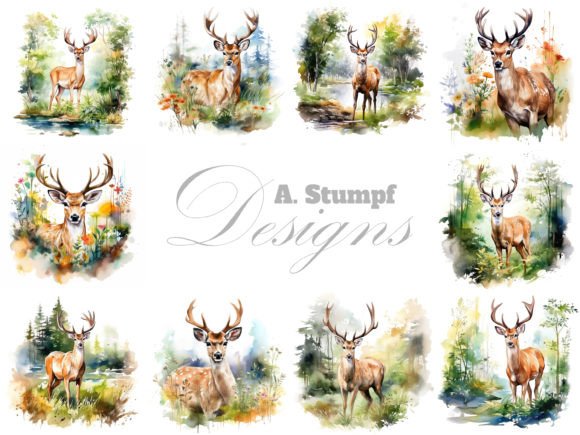
Watercolor as a medium has an inherent personality. It’s fluid, organic, and slightly unpredictable. The digital brushstrokes in these paintings mimic the real-world interaction of pigment and water, creating soft edges, gentle color bleeds, and a sense of handcrafted authenticity. The subject—a deer in a summer setting—adds layers of symbolism: grace, gentleness, peace, and a connection to the wild. The overall appeal isn’t just in the image itself, but in the emotion it evokes. It feels serene, elegant, and timeless, avoiding the sterile look of many digital graphics.
When you’re selecting a premium font or a display font for a project, you consider its personality and how it communicates tone. The same principle applies to illustrations. These watercolor paintings act like a script font or handwritten font—they bring warmth, personality, and a human touch to your work. They are the visual equivalent of a well-crafted typeface, designed to set a specific mood and establish a clear brand identity.
Practical Applications Across Creative Fields
The true value of a high-quality asset bundle is its versatility. A set of 10 high-resolution, 4096x4096 pixel images on a solid white background isn’t just a collection of pretty pictures; it’s a toolkit for solving real design problems.
- For Branding and Marketing: A small business owner creating a brand for an artisan soap company, a wellness retreat, or a boutique stationery line needs visuals that feel authentic and premium. Using one of these deer illustrations as a central logo element or a secondary brand mark can instantly convey a message of natural quality, care, and sophistication. It becomes a key part of the brand identity, used on packaging, business cards, and website headers.
- For Web and Digital Design: Bloggers and content creators constantly need fresh imagery. These illustrations are perfect for creating hero images for articles on nature, mindfulness, or sustainable living. They work beautifully as background elements for social media graphics, adding depth without overwhelming text. The high resolution (300 DPI) ensures they look crisp on high-density screens, and the JPG format allows for easy integration into any web design workflow.
- For Print and Publishing: Imagine a book cover for a fantasy novel, a children’s storybook, or a chapter divider in a nature magazine. The generous size of these files makes them suitable for high-quality print design. They can be used as full-page illustrations, subtle accents in editorial design, or elegant motifs on wedding invitations and greeting cards.
- For Personal and Craft Projects: The appeal extends beyond commercial use. Crafters and hobbyists can print these images for decoupage, use them as a base for digital journaling, or create custom art prints for their homes. The instant digital download means the creative process can begin immediately.
Integrating Watercolor Art with Typography
The most effective designs use multiple elements in harmony. When pairing these watercolor paintings with typography, the goal is balance and readability. A detailed, painterly illustration pairs best with cleaner typefaces. Consider using a simple sans serif font for body text to ensure legibility, and perhaps a elegant serif font for headlines to complement the classic feel of the art. Avoid pairing them with overly ornate script fonts, which can create visual clutter.
Think about visual hierarchy. The illustration can serve as the focal point, with text arranged around it. The solid white background is a significant advantage here—it isolates the artwork, making it easier to integrate into layouts without complex masking. This clean presentation enhances professionalism and ensures the art remains the star. For social media graphics, you could overlay a semi-transparent colored panel with text, allowing the deer illustration to peek through, creating a layered, sophisticated look.
A Note on Workflow and Licensing
When evaluating any design assets, always check the licensing. Most bundles intended for commercial use will grant you a license to incorporate the artwork into your end products for sale—like a T-shirt design, a sold planner, or a client’s website—but not to resell the raw files themselves. Understanding this is crucial for commercial projects.
Before starting a large project, test how the assets fit into your existing system. Import the JPGs into your preferred software—whether it’s Photoshop, Illustrator, or a design platform like Canva. Scale them, layer them with your chosen fonts and color palettes, and see how they perform. This practical testing is the best way to determine if the style aligns with your project’s goals and if the assets will truly save you time and elevate your work.
In the end, a resource like a deer in summer watercolor painting bundle is more than just clipart. It’s a versatile component of a larger creative font and asset ecosystem, designed to bring a specific, beautiful aesthetic to a wide range of projects. It’s about adding a touch of organic elegance that resonates with audiences seeking authenticity and beauty in a digital world.